Frontier Science Communication at M+: Setting the Stage for the Next Convergence
Held on 22 April 2026 at M+ Museum in Hong Kong’s West Kowloon Cultural District, “Quantum × AI × Web3: The Next Convergence” was convened as a side event of Hong Kong Web3 Festival 2026, the fourth edition of an annual global Web3 gathering scheduled for 20–23 April 2026 at the Hong Kong Convention and Exhibition Centre, bringing together digital-asset exchanges, Web3 projects, crypto-sector experts, researchers, and practitioners. The choice of M+ was symbolically apt: the museum is described in the event materials as Asia’s first global museum of contemporary visual culture, designed by Herzog & de Meuron, overlooking Victoria Harbour, and dedicated to visual art, design and architecture, moving image, and Hong Kong visual culture from the twentieth and twenty-first centuries. In that setting, the event presented frontier computation not as an abstract technical race, but as a civic, cultural, and human-centered question: how should societies build systems that compute, reason, transact, verify, and preserve human agency?
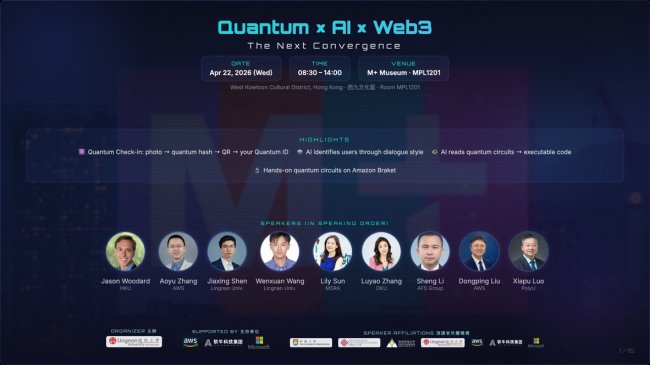
Figure 1 Quantum × AI × Web3 at M+
Organized by Lingnan University with support from Amazon Web Services, Microsoft, and AIRSTSOFT Technology Group, the program brought together speakers from universities, industry research laboratories, cloud infrastructure, and Web3 security. The speaker group included C. Jason Woodard, Professor and Co-Director of the School of Innovation at The University of Hong Kong, as the opening keynote speaker; Aoyu Zhang, Senior Applied Scientist at Amazon Web Services; Jiaxing Shen, Assistant Professor in the School of Data Science at Lingnan University; Lily Sun, Director of the Microsoft Research Asia Accelerator Team; Luyao Zhang, Senior Research Scientist at the Digital Innovation Research Center, Duke Kunshan University; Sheng Li, CEO of AFS Group;Dr. Dongping Liu, Research and Education Industry Lead at Amazon Web Services and Chairman of CCF YOCSEF Hong Kong; and Daniel Xiapu Luo, Associate Dean for Research in the Faculty of Computer and Mathematical Sciences and Professor at The Hong Kong Polytechnic University, as the closing keynote speaker. Rather than following the format of a conventional technical symposium, the event combined keynote lectures, research presentations, a participatory Quantum Check-in experience, an interactive signature-wall demonstration, a hands-on Amazon Braket quantum computing workshop, and a Quantum Experience Zone, creating a diverse model of frontier science communication.
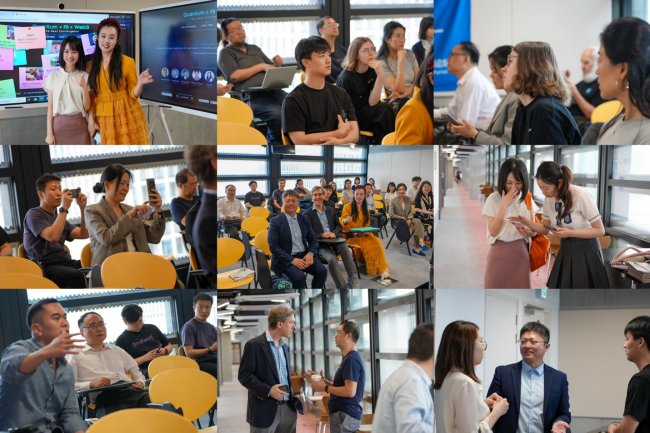
Figure 2. A participatory model of frontier science communication
The scientific premise of the event was that quantum computing, artificial intelligence, and Web3 are becoming mutually dependent layers of future digital infrastructure. Quantum information science is moving from theoretical curiosity toward deployable technology; Web3 must confront the long-term vulnerability of RSA and elliptic-curve cryptography to quantum attacks; and AI is reshaping privacy, identity, and trust in decentralized systems. The event’s design reflected this convergence in both content and form. The Quantum Check-in translated quantum-inspired identity and attestation into a visible public interaction, while the Amazon Braket workshop allowed participants to move from conceptual discussion to direct experimentation with quantum circuits. Together, the talks and interactive experiences treated the convergence of Quantum, AI, and Web3 as one systems problem: how to design trustworthy intelligence, quantum-ready computation, and decentralized coordination in ways that remain accessible, verifiable, and accountable to society.
From Concepts to Systems: Research Talks, Demonstrations, and Technical Pathways
Making Quantum Identity Visible
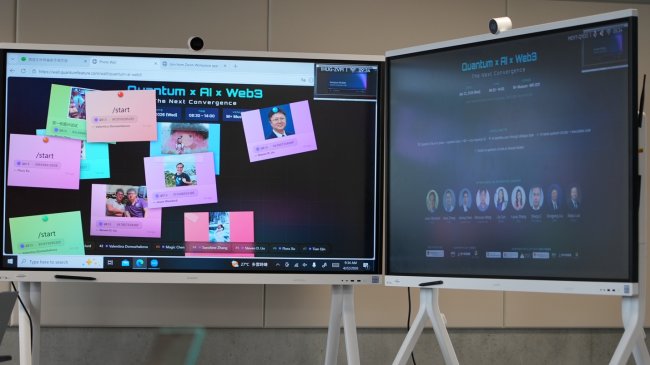
Figure 3. Quantum Check-in and the signature wall
The event began with registration and a Quantum Check-in experience, turning technical ideas into a participatory demonstration. Participants interacted through Telegram and the event’s signature wall, where uploaded text and photos were associated with a quantum-inspired digital signature experience. The recording notes describe this as a quantum security demonstration powered by AWS, in which a quantum signature system was introduced through a public-facing workflow. This opening was more than a novelty. It established a methodological theme for the entire event: frontier technologies become socially meaningful only when people can see, test, question, and experience them.
Computation, Intelligence, Trust, and Control
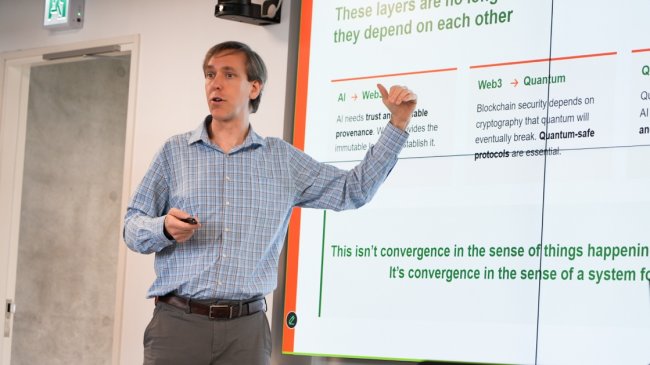
Figure 4. Intelligence, trust, and computation as converging layers
The intellectual framework was then set by Prof. Jason Woodard in the opening keynote, “The Next Convergence: Computation, Intelligence, Trust, and Control.” Woodard placed the present moment within a history of computing transitions, from the web to mobile and cloud to AI, arguing that each wave has redistributed value and redefined governance by raising questions of platform control. His central claim was that today’s shift is different because multiple foundational layers are changing simultaneously. AI offers reasoning at scale; Web3 offers trust without centralized intermediaries; quantum computing offers new forms of processing beyond classical limits. These layers, he argued, are no longer independent: AI needs provenance and verification, Web3 needs quantum-safe cryptography, and quantum systems will require AI for optimization and error management.
Quantum Readiness as Engineering Practice
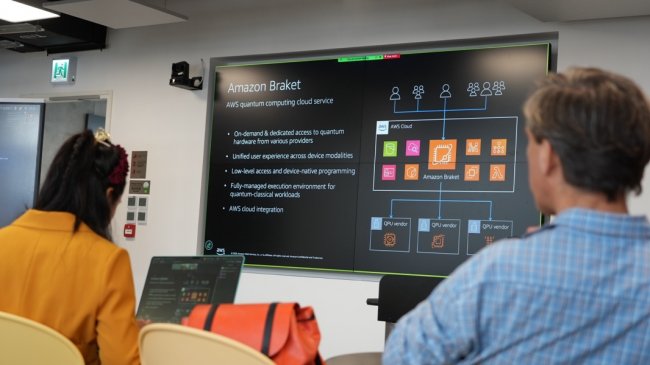
Figure 5. Amazon Braket and cloud-based quantum experimentation
This framing moved directly into infrastructure through Aoyu Zhang’s presentation on Amazon Braket, “Accelerate the Journey to Quantum Readiness.” Zhang presented Amazon Braket as a cloud service for quantum computing that provides unified access to quantum hardware from multiple providers, supports on-demand and dedicated access modes, enables low-level device-native programming, and integrates with AWS cloud services for hybrid quantum-classical workloads. The emphasis was practical rather than speculative: although large-scale commercial quantum advantage may remain a longer-term objective, the scientific and engineering community can already build literacy, experimental workflows, and quantum-classical pipelines. Examples included program sets for efficient batch execution, hybrid jobs, quantum-HPC Monte Carlo simulations, cloud-native compute pipelines, and traditional HPC integration.
When Anonymous AI Is No Longer Anonymous
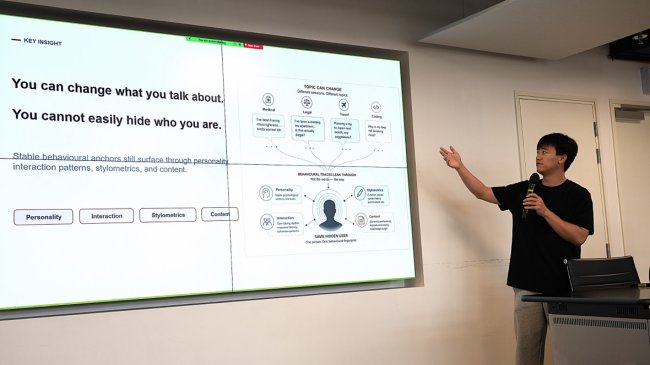
Figure 6. From dialogue attribution to privacy defence
The program then turned from computation to identity and privacy. In “The Chatbot Knows It’s You: Dialogue Attribution in Unauthenticated Human–LLM Sessions,” work by Wang Wenxuan, Liu Zirui, Kou Haoxuan, Liu Xuefeng, and Shen Jiaxing challenged the common assumption that “no login” implies anonymity, introduced by Wang Wenxuan and Dr. Shen Jiaxing. The presentation argued that account identifiers may disappear while behavioral fingerprints remain writing habits, interaction rhythms, personality cues, and assistant-mirrored signals can link users across sessions even when topics change. The research introduced the UMA framework, based on personality, interaction, stylometric, and content signals, and reported 92.05% AUC on the hardest cross-topic setting, with additional evidence that even assistant-only responses may leak identity cues. The proposed defense, IDShield, translated the finding into privacy infrastructure: audit attribution risk, detect behavioral leakage, de-identify risky cues before model inference, and generate compliance evidence.
AI Research Ecosystems for Real-World Impact
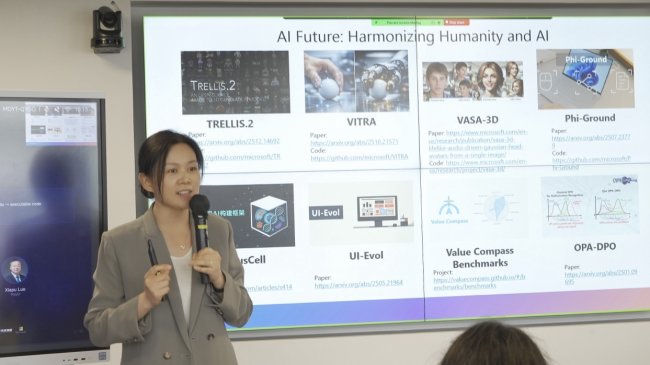
Figure 7. AI research from foundations to real-world impact
Lily Sun’s presentation, “AI Frontiers, Global Impact: Shaping the Future of AI at Microsoft Research Asia,” broadened the discussion from individual privacy risk to the institutional and research ecosystems needed to govern AI’s trajectory. MSRA’s agenda was presented across AI foundations, future human–AI interaction, and real-world impact, with attention to interdisciplinary and cross-boundary research, Hong Kong academic engagement, internships, visiting-scholars programs, and research translation. In the structure of the event, this talk served as a bridge: if the previous session showed that AI can expose new privacy risks, the MSRA overview showed that the response must include not only better models, but research institutions, talent systems, collaborations, and governance-oriented translation.
From Blockchain Trilemma to Quantum-Enabled Intelligent Economics
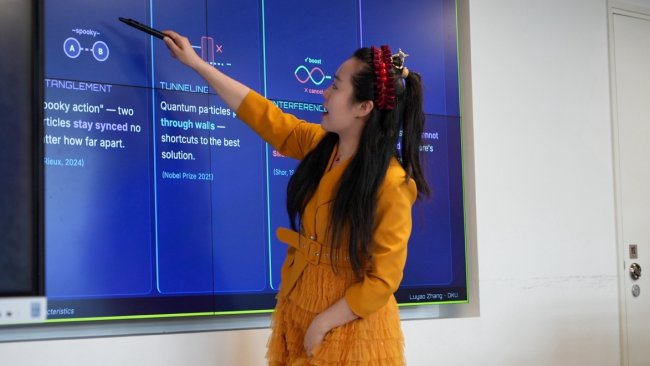
Figure 8. From blockchain trilemma to quantum-enabled Web3
The Web3 dimension was brought into sharper focus by Luyao Zhang’s “From Trilemma to Trinity: Quantum-Enabled Web3 as the Nervous System of Intelligent Economics.” The talk reframed the familiar blockchain trilemma—security, decentralization, and scalability—through a quantum-enabled lens. Zhang highlighted quantum both as a threat to existing cryptography and as a potential design resource for future decentralized systems. Security was connected to post-quantum cryptography and quantum key distribution; decentralization to quantum random number generation and fairer coordination mechanisms; and scalability to quantum optimization, quantum machine learning, and more efficient multi-agent economic systems. Rather than treating Web3 as only a blockchain engineering problem, the talk positioned quantum-enabled Web3 as part of a broader architecture for “intelligent economics,” in which markets, contracts, agents, and trust mechanisms may become more adaptive, secure, and computationally expressive.
When AI Reads Quantum Circuits
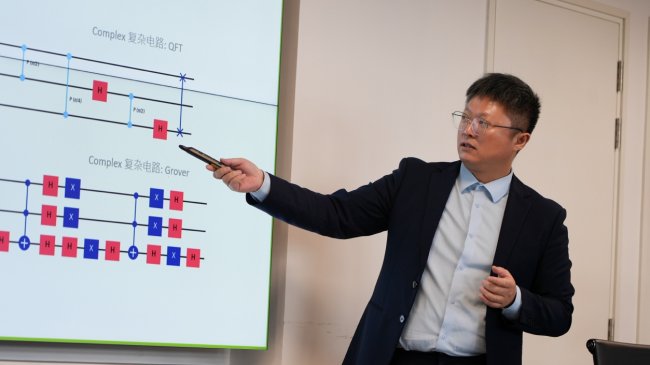
Figure 9. Quantum Circuit Vision: from diagram to executable code
The QCV talk, “Quantum Circuit Vision: When AI Reads Quantum — Automating Code Generation from Circuit Diagrams,” presented a four-author work by Dongping Liu, Li Sheng, Aoyu Zhang, and Luyao Zhang, introduced at the event by Sheng Li and Dr. Dongping Liu. The work addressed a practical bottleneck in quantum development: quantum circuits are often communicated visually in papers, textbooks, and teaching materials, while executable implementation requires precise, SDK-specific code. QCV uses multimodal large language models to read circuit diagrams, generate Amazon Braket code, and verify the output through syntax, execution, and unitary-fidelity checks. The research reported strong performance on structured circuits and blockchain-relevant cases, including quantum random number generation, post-quantum cryptography verification, Grover threat modelling, quantum VRF, and validator-agreement circuits, while noting that parallel gate layers and irregular layouts remain key failure modes. Dr. Liu also connected the research to AWS support pathways for academia, including cloud credits, Amazon Research Awards, open-data resources, researcher training, and other programs that help students and faculty prototype, reproduce, and scale cloud-based research workflows.
Toward Quantum-Safe, Efficient, and AI-Enhanced Blockchain
The program then looked ahead to The Web Conference 2026 through a preview of the accepted tutorial, “Quantum-Safe, Efficient, and AI-Enhanced Blockchains for the Web.” Positioned at the intersection of the day’s three core themes, the tutorial framed blockchain’s next technical frontier as a combined challenge of cryptographic resilience, computational efficiency, and intelligent automation. Quantum-safe design addresses the long-term security risks that quantum computing poses to today’s public-key infrastructure; efficient blockchain architectures respond to the persistent demands of scalability, latency, and resource optimization; and AI-enhanced methods open new possibilities for automated analysis, quantum-circuit generation, security verification, and adaptive Web3 systems. By bringing these directions together, the preview extended the event’s central thesis into a research and education agenda for the web community: future blockchain infrastructure must be prepared not only for a post-quantum world, but also for an AI-mediated environment in which code, contracts, agents, and verification tools increasingly co-evolve.
MEV, DeFi, and the Adversarial Frontier of Web3
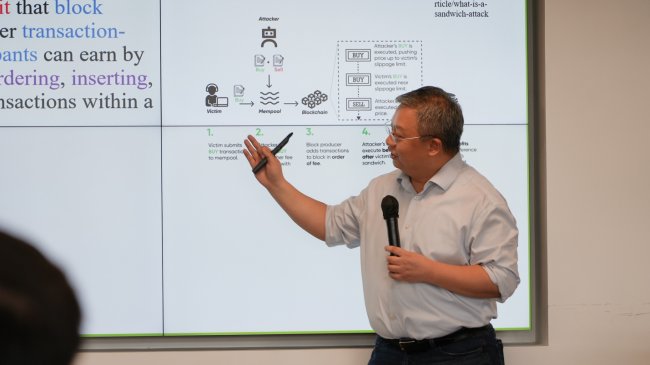
Figure 10. MEV as a full-stack adversarial system
The closing keynote, “Illuminating the Dark Forest: Understanding and Discovering MEV in DeFi,” by Prof. Daniel Xiapu Luo, brought the convergence discussion into the adversarial terrain of decentralized finance. MEV, or maximal extractable value, was presented not merely as a trading phenomenon, but as a structural security problem in which economic incentives, transaction ordering, infrastructure design, and automated strategy collide. Luo showed how MEV has evolved into a full-stack arms race: searchers analyze private bundles, bots optimize arbitrage and liquidation strategies, DeFi applications develop evasion techniques, and high-throughput systems race to identify profitable opportunities before they vanish. His keynote also pointed toward the next frontier of DeFi and AI integration, where autonomous agents may monitor markets, coordinate across protocols, and manage capital in real time. In such a DeFi environment, security risks will extend beyond smart contracts to include off-chain data manipulation, adversarial signals, unsafe tool use, and mismatches between what an agent believes and what the blockchain ultimately executes.
Learning by Doing: From Bell States to Quantum Experience
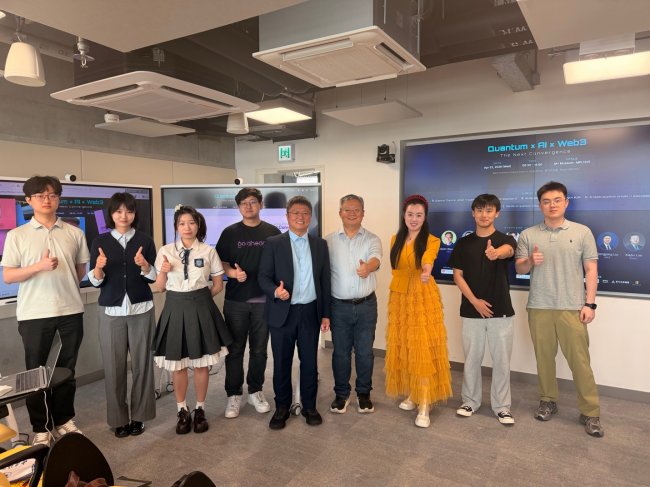
The formal talks were followed by the Hands-on Quantum Computing with Amazon Braket workshop. Participants explored Bell-state experiments through the Amazon Braket Python SDK, constructing simple circuits and comparing execution across local simulators, managed simulators, and quantum processing units. The workshop materials emphasize Bell states as an accessible entry point into quantum entanglement, while also showing the difference between ideal simulator results and noisy behavior on real devices. The event then continued with the Quantum Experience Zone, including the Quantum ID photo booth, AI quantum avatar concepts, and networking.
The Next Convergence for Humanity
The coherence of the full program lay in its movement from public experience to scientific architecture, and from technical infrastructure to governance, education, and adversarial systems. The Quantum Check-in made quantum-inspired identity visible; the opening keynote framed AI, Web3, and quantum as interdependent layers of a forming socio-technical system; the Amazon Braket and workshop sessions showed that quantum readiness is already becoming an engineering practice; the AI privacy and MSRA sessions connected intelligence to privacy, institutions, and responsible impact; the Web3-focused talks and tutorial preview translated quantum safety, AI assistance, and blockchain efficiency into a shared research agenda; and the closing MEV keynote returned the discussion to the adversarial realities of decentralized systems operating at machine speed.
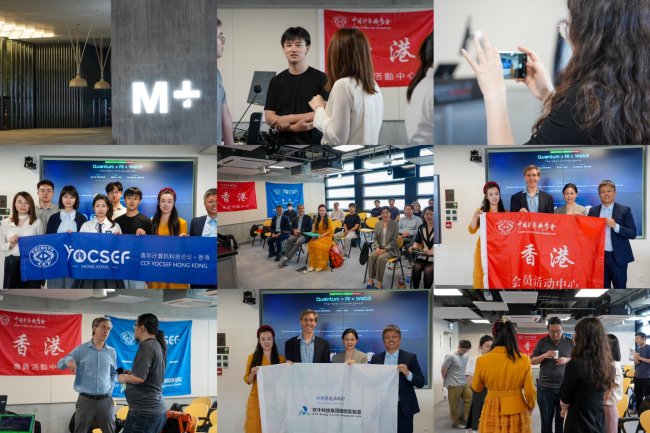
Figure 11. Hands-on quantum computing with Amazon Braket
Taken together, “Quantum × AI × Web3: The Next Convergence” demonstrated that the next convergence is not simply technological. It concerns how future systems will distribute agency, trust, privacy, accountability, and economic coordination. AI systems increasingly reason and act; Web3 systems transact and verify; quantum systems may reshape computation, optimization, randomness, and cryptographic security. By combining formal research communication with participatory demonstrations and hands-on experimentation, the event showed how frontier science can be made legible to broader communities while preserving technical depth. Its final implication was clear: convergence will happen, but its social value will depend on who shapes it, under what principles, and for whose benefit.